
Off-the-shelf inventory and order-management tools work fine — until your business grows past what they were built for. The signs are rarely dramatic at first: a workaround here, a spreadsheet bolted on there. By the time it's obvious, the workarounds have become half the business's actual process.
Where off-the-shelf tools start to break down
Most inventory and order platforms are built for a generic business, which means they're good at generic problems. The trouble starts when your business has a rule they never anticipated: a loyalty program that isn't a flat discount, a category structure that's three levels deep, an order workflow that needs manager approval past a certain amount. None of that is exotic — it's just specific to how you actually operate, and specific is exactly what generic software struggles with.
What "outgrowing" a platform actually looks like
- Plugins or add-ons fighting each other to patch in one missing feature
- A spreadsheet (or three) tracking something the platform should track natively
- Reports that answer questions no one is actually asking
- Every content update needing a developer, because the built-in editor can't do it
- A loyalty or credit system that's really just a discount code someone remembers to apply
None of these individually mean "replace everything." Together, and getting worse every quarter, they mean the platform is now costing more in workarounds than a custom build would cost outright.
What we built when Need For Office hit this point
Need For Office needed multi-level product categories, wishlists and reviews, and — the part no off-the-shelf cart handles well — a real store-credit and loyalty wallet: credit that's earned, capped, and spent under rules the business actually wants, not whatever a generic "points" plugin assumes. We built it as a custom Laravel 11 application: five dedicated models governing how credit is earned and spent, Stripe for checkout, and a page-builder-style CMS after launch so non-technical staff could edit site content without waiting on a developer for routine changes. Media was later migrated to Cloudinary for reliability as the catalog grew.
When it's actually worth the switch
Custom doesn't win by default — for a straightforward catalog and a small team, an off-the-shelf platform is still the right call, and we'll tell a client that directly. The switch is worth it once the business logic itself has become the differentiator: a loyalty system that's part of how customers stay loyal, an approval workflow that's part of how the business controls risk, a catalog structure that's part of how customers actually shop. At that point, the platform isn't just hosting your business anymore — it's shaping it, and it's worth owning the part that shapes it.
Related Service
Custom ERP & E-commerce Systems
Inventory, order management, and e-commerce platforms built with Laravel and Next.js.
Learn more →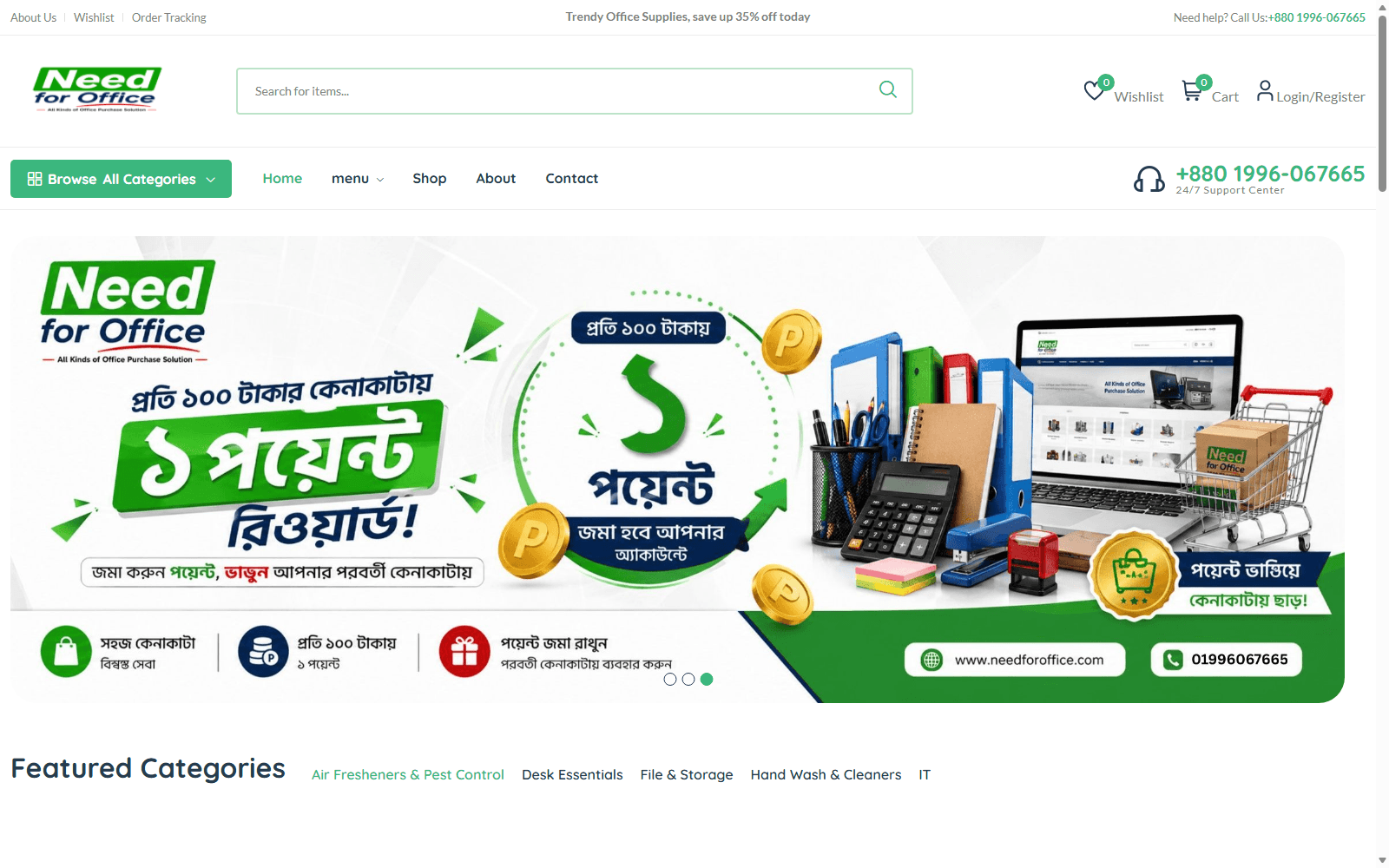
Next post
WordPress or a Custom Laravel App? How We Decide